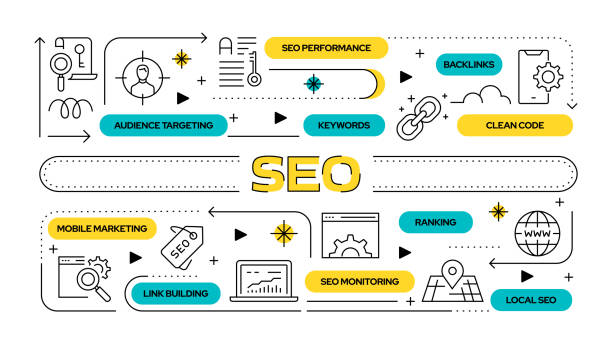
Topics

Auditing On-Page SEO Elements

Performing Technical SEO Health Checks

Analyzing Keyword Performance and Strategy

Evaluating Backlink Profile and Authority

Measuring User Experience and Engagement Metrics

Conducting Comprehensive Competitor SEO Analysis

Utilizing Google Search Console for Diagnostics

Leveraging Google Analytics for SEO Insights

Assessing Local SEO and Map Pack Performance

Knowledgebase

Recent Articles

Accurately Gauging Keyword Difficulty Relative to Your Domain’s Authority

Accurately Gauging Keyword Difficulty Relative to Your Domain’s Authority

The pursuit of ranking for valuable keywords is a cornerstone of SEO, yet embarking on this quest without a realistic assessment of the competitive landscape is akin to setting sail without a map.For website owners and SEO practitioners, the critical question is not merely which keywords are desirable, but which are attainable given their domain’s current authority.

The Critical Role of Crawl Budget in SEO Performance

The Critical Role of Crawl Budget in SEO Performance

In the intricate ecosystem of search engine optimization, a website’s visibility hinges on the foundational process of crawling and indexing.Central to this process is the concept of crawl budget, a frequently overlooked yet critical factor that directly dictates a site’s SEO performance.

F.A.Q.

Get answers to your SEO questions.

What are the most common technical culprits behind a poor INP score?
Poor INP is often caused by long-running JavaScript tasks that block the main thread. Common culprits include unoptimized third-party scripts, heavy JavaScript frameworks during user interaction, and inefficient event listeners. To fix, break up long tasks, defer non-critical JavaScript, use web workers, and optimize your event callbacks (debouncing/throttling). Profiling with Chrome DevTools’ Performance panel is essential to identify the specific code blocking responsiveness.
What role does schema markup play, and how do I audit it?
Schema markup (structured data) creates enhanced descriptions in SERPs (rich snippets, FAQs, product info), boosting visibility and click-through rates. An audit verifies correct implementation and absence of errors. Use Google’s Rich Results Test to validate your markup. Check that it’s applied to the right pages (products, articles, local business info) and that the data is accurate. Proper schema doesn’t directly boost rankings but significantly improves how your result is presented, giving you a competitive edge.
How do I use Google Search Console for backlink analysis?
Navigate to the “Links” report in Search Console for your top linked pages and anchor text. While it doesn’t label links as “toxic,“ it provides the raw data from Google’s perspective. Cross-reference this list with your third-party tool data. Pay special attention to the “Top linking sites” list—a sudden influx from a single low-quality domain is a red flag. Use this data to identify unnatural anchor text clusters. It’s your primary source for seeing what Google acknowledges as a link to your site.
Can I identify unlinked brand mentions from competitor analysis?
Yes, indirectly. While analyzing competitor backlinks, note the types of publications mentioning them. Use dedicated mention-tracking tools (like Mention, Brand24) or Google search operators (`“Your Brand” -site:yoursite.com`) to find instances where your brand is discussed without a link. This is low-hanging fruit; a polite outreach email to the author or webmaster requesting a link often succeeds, as they’ve already engaged with your brand contextually.
How do I assess the relevance and topical authority of linking sites?
Manually review the linking page and site. Does the content thematically align with your page? A link from a niche blog in your industry carries more “authority transfer” than one from a generic directory. Use tools to analyze the linking site’s top-ranking pages and main topical clusters. Context is king: a link surrounded by relevant, expert content passes more semantic signals and is weighted higher than an irrelevant or spammy sidebar link.
Image