

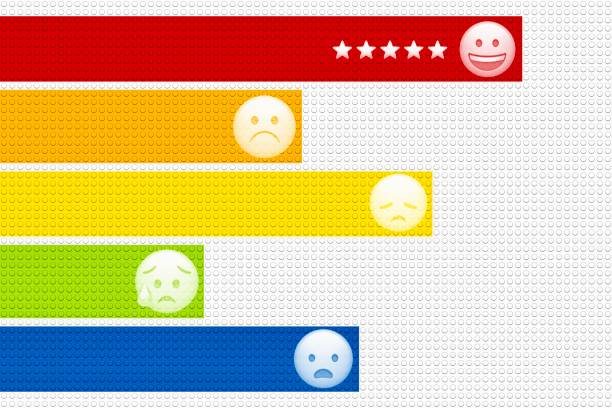
In the digital marketplace, customer reviews have become a critical source of insight, shaping purchasing decisions and business strategies.To effectively harness this wealth of unstructured data, businesses and analysts rely on sentiment analysis.
Most intermediate web marketers treat backlink velocity as a binary metric: either a profile is acquiring links at a healthy rate, or it is falling behind competitors. This oversimplification ignores a more nuanced signal that sits at the intersection of algorithmic trust and competitive strategy. The real question is not simply how many links you earned last month, but whether your velocity curve exhibits “temporal authority” — a pattern of steady, contextual growth that mirrors genuine editorial interest rather than campaign-driven bursts of artificial activity.
When Google’s systems evaluate your backlink profile, they are not merely counting links. They are modeling a temporal signature. A profile that acquired 50 links per month for 24 consecutive months carries a fundamentally different risk profile than a profile that acquired 600 links in January, zero in February, and 50 for the remainder of the year. The former suggests an entity that produces consistent value, referenced naturally by publishers over time. The latter strongly implies a campaign — whether a paid placement, a digital PR push, or an aggressive guest posting sprint — that has run its course.
This is where the concept of velocity stagnation becomes dangerous. Many web marketers interpret a flat velocity line as stability. They believe that if they hold steady at 30 links per month, they are maintaining their authority. In reality, authority is relative. If your niche’s ecosystem sees an average velocity increase of 15 percent year over year — driven by new content formats, growing competition, or increased digital publishing — your flat line represents a relative decline. Algorithms that incorporate temporal decay into their link valuation models will progressively discount your older citations, and if your current acquisition rate cannot offset that decay, your aggregate authority actually recedes.
The most overlooked indicator of problematic velocity stagnation is what SEOs call the “portfolio effect.” When a site’s link acquisition depends heavily on a small subset of referring domains that repeatedly link to new content, the velocity may look healthy on a chart but actually masks a lack of discovery. Genuine authority signals come from first-time linking domains that discover your content through independent research, organic citations, or social amplification. A velocity that is driven entirely by repeat linkers — especially those with overlapping ownership or editorial calendars — often correlates with structured outreach campaigns that Google’s systems increasingly flag as unnatural patterns.
Consider a technical scenario. Your site links to a newly published pillar page, and within 72 hours, 12 different blogs in your niche pick it up. That is velocity. But if those same 12 blogs are the only sources ever linking to your content over the next six months, the marginal value of each additional link from that cohort decays. Google’s link graph models account for this via co-citation clustering. If two domains always link to the same third domain, their votes become less independent. The velocity effectively becomes noisier, not stronger.
Where this really bites the intermediate-level webmaster is during algorithmic updates that target link spam or unnatural outreach patterns. Look back at the rollout cycles for the past three core updates. In nearly every case, sites with aggressive, campaign-driven velocity spikes followed by plateaus saw the most significant traffic erosion. The pattern is consistent: a blast, a plateau, a penalty or a filter. Your link velocity timeline should not look like a city skyline of skyscrapers separated by empty lots. It should look like a rolling hill — gentle slopes upward, occasional rises after content breakthroughs, and slow, steady growth even during your publishing lulls.
To assess whether your velocity is truly healthy, stop looking at raw acquisition numbers alone. Instead, plot your velocity against domain diversity. For any 30-day window, what percentage of new links come from domains that have never linked to you before? If that percentage drops below 40 percent over two consecutive quarters, you are likely suffering from temporal authority deficit. Your link profile is aging, and your current acquisition pattern is failing to replenish the independent signals that search engines use to differentiate genuine authority from manufactured authority.
There is also a qualitative dimension to velocity trends that data tools rarely surface. Pay attention to the content types that drive your link acquisition. If your fastest-growing velocity comes from listicles, tool reviews, or aggregator pages that rotate through resources, those links carry significantly less algorithmic trust weight than links from editorial deep-dives, original research citations, or academic references. Velocity without contextual permanence is a phantom signal. A link that appears in a weekly roundup and disappears from the front page within 72 hours provides a short-lived velocity bump that contributes almost nothing to your long-term authority architecture.
For the intermediate marketer, the corrective action is not to artificially inflate velocity. It is to manipulate the shape of your curve. Break your link acquisition into three non-obvious streams: passive citations that come from genuinely useful data or tools you publish, semi-passive acquisitions from industry roundups that you earn through relationship building rather than direct pitching, and active outreach that targets completely new domains outside your existing linker network. If these three streams move in parallel, your velocity will naturally grow in a way that algorithms interpret as legitimate expansion rather than strategic manipulation.
The next time you audit your backlink profile, ignore the total number for a moment. Look at the timeline. If the last six months look like a staircase, you are likely fine. If they look like a flat line interrupted by a single spike, you have a temporal authority problem that no amount of on-page optimization will fix. The smartest play is to let your velocity grow organically, even if that means slower month-over-month gains, because the algorithm values the shape of your growth more than the speed of it.

In the digital marketplace, customer reviews have become a critical source of insight, shaping purchasing decisions and business strategies.To effectively harness this wealth of unstructured data, businesses and analysts rely on sentiment analysis.

For SEO practitioners who cut their teeth on the Page Experience update, the notion that Core Web Vitals are a ranking signal is far from novel.Yet the precise mechanics through which a set of user-centric speed metrics translates into mobile search visibility often remains unpacked at a surface level.

For the intermediate SEO practitioner, the meta description often feels like a tactical afterthought—a box to be checked after the more complex work of keyword research, on-page optimization, and technical audits is complete.This is a critical misstep.
Get answers to your SEO questions.
