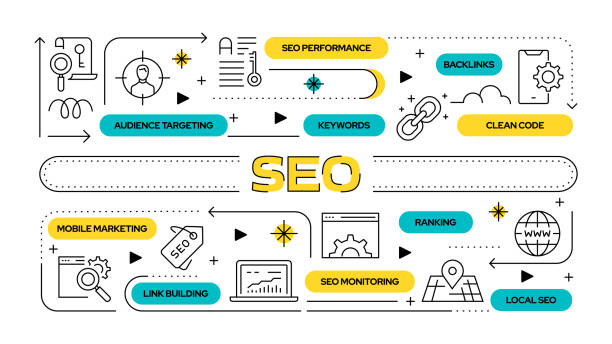
Assessing Competitor Technical SEO Implementations
The Strategic Imperative of Analyzing Competitor Site Architecture and Internal Linking
In the intricate and ever-evolving arena of search engine optimization, success often hinges not just on understanding one’s own digital presence but on deciphering the strategies of those who rank above you. While keyword research and backlink analysis are foundational, a more profound and often overlooked tactic lies in dissecting a competitor’s site architecture and internal linking structure. This practice is crucial because it unveils the strategic blueprint of a successful website, offering actionable insights into content prioritization, topical authority, and user experience design that search engines reward.
At its core, site architecture—the way a website is organized and structured—is a direct signal to search engines about what a business deems important. By analyzing a competitor’s hierarchy, one can reverse-engineer their content strategy. The prominence given to certain categories, the depth of subtopic clusters, and the logical flow from broad themes to specific details reveal a roadmap of what the competitor believes constitutes a comprehensive topical authority. For instance, a competitor who dedicates an entire pillar section with numerous supporting articles to a specific service is signaling to both users and search engines that this is a cornerstone of their expertise. Ignoring this architectural insight means potentially overlooking entire content silos that the market and algorithms have already validated as valuable. It allows a business to identify content gaps in their own strategy, not just at the page level, but within the broader context of how information should be organized for maximum thematic relevance and crawl efficiency.
Furthermore, internal linking is the connective tissue that brings a site’s architecture to life, transforming a static collection of pages into a dynamic, navigable ecosystem. Analyzing a competitor’s internal link graph is akin to mapping the pathways of their user journey and understanding how they distribute “link equity” throughout their domain. One can observe which pages are treated as cornerstone content by the sheer volume of internal links pointing to them, indicating pages the competitor is actively trying to bolster in search rankings. Similarly, examining the anchor text used in these links provides a window into the keyword targeting strategy, showing exactly how they phrase and contextualize their links to reinforce topical relevance for both users and crawlers. This analysis can uncover sophisticated strategies, such as the strategic funneling of authority from high-traffic blog posts to commercial service pages, a tactic that might be missing from a more simplistic internal linking approach.
Beyond pure SEO mechanics, this analysis is fundamentally about understanding user experience. A competitor’s site architecture and internal links have been tested in the live market; their current structure often reflects what has proven to work in reducing bounce rates, increasing session duration, and guiding visitors toward conversion. A logical, intuitive architecture with contextual links suggests a site built for human comprehension, which search engines increasingly prioritize. By identifying the navigational cues and contextual pathways that competitors provide, a business can adopt and refine these patterns to enhance its own site’s usability, thereby satisfying a key ranking factor while genuinely improving visitor engagement.
Ultimately, analyzing a competitor’s site architecture and internal linking is a form of competitive intelligence that moves beyond superficial observation. It provides a strategic lens through which to view the entire content and technical SEO landscape. This process reveals not just what content ranks, but how that content is organized and interconnected to build authority, guide users, and satisfy algorithmic preferences. In a digital environment where mere content creation is insufficient, understanding these structural and relational elements is crucial for constructing a website that is not only discoverable but also authoritative, user-friendly, and strategically positioned to compete effectively. It transforms guesswork into informed strategy, allowing one to build upon proven frameworks rather than starting from a blank slate.