


You already know the difference between a manual action and a security issue.A manual action is a human reviewer taking your site out of the trust equation for violating a specific quality policy.
You have been running rank tracker exports for two years, watching that green “position 3” box for your bread-and-butter transactional keyword. You feel confident because the number hasn’t budged in six months. Meanwhile, organic traffic from that query dropped 18% quarter over quarter. The disconnect is not a tracking error; it is a fundamental mismatch between what a static rank column measures and what the search engine actually surfaces today. Position-based rank tracking, as a lone metric for keyword performance, is becoming a brittle proxy for real visibility.
Consider what the SERP now carries. Knowledge panels, featured snippets, local packs, image carousels, People Also Ask accordions, video results, and shopping grids all compete for pixels above the fold. A “position 1” organic listing might sit below a four-pack local block and a three-item featured snippet. Your organic link occupies the first true blue link, but the user’s gaze never reaches it because the query intent is satisfied two modules higher. Your rank tracker says “1.” Your analytics say “almost zero impressions for that URL.” The tool did not lie—it reported the position of your listing in the organic block, but it ignored the SERP architecture that buried that block.
A more useful approach is to shift from rank preservation to visibility share analysis. Visibility share, sometimes called impression share at the keyword level, measures the proportion of time a domain appears in the visible viewport for a given query, weighted by the real estate each SERP feature occupies. It is not a single integer. It is a derived value that accounts for whether your listing appears inside a featured snippet, a video carousel, or the standard organic stack, and how often those placements actually render above the fold on a given device.
The first parameter to model is absolute visibility position. This is not the rank column from your tool but the actual visual position from the top of the browser window. A standard organic result at rank 4 on desktop might start at pixel 600, while a featured snippet from a competitor starts at pixel 120. The snippet occupies 400 pixels of prime real estate. Your rank 4 link, even if it is the most authoritative answer, may never be scrolled to by the majority of users. By logging the pixel position of every SERP element across multiple viewport sizes and screen resolutions, you can derive a probability curve for how often your URL is actually seen. Data from eye-tracking studies and click-through rate analyses shows that visibility drops non-linearly after the first 300 pixels. A rank 3 organic link below a 250-pixel featured snippet can have an effective visibility that is closer to rank 7 on a clean SERP.
The second dimension is feature volatility. SERP features are not static. A keyword that shows a featured snippet today may revert to a ten-blue-link layout tomorrow, or swap to a local pack after a mobile update. Relying on a single weekly snapshot of a tool that only logs the organic position misses those oscillations. You need to aggregate daily or intra-day data for at least ninety days to detect the pattern. If your target keyword shows a featured snippet for 65 percent of tracking observations, and your URL appears inside that snippet for only 10 percent of those instances, your true visibility is far lower than your static rank implies. The strategic implication is that you should not optimize solely for higher organic rank. You should optimize for snippet eligibility, for structured data that triggers carousel inclusion, and for content formats that match the predominant SERP type for that query.
A third layer is temporal trend analysis of visibility share itself. Look for seasonality in SERP feature presence. E-commerce keywords around the holiday season often see an influx of shopping ads and product carousels that push organic results down. Your rank might stay constant at position 4, but your visibility share drops by 40 percent because the SERP added two rows of paid product listings. If you only monitor rank, you miss the seasonal compression. By tracking visibility share week over week and comparing it against a baseline of the same period last year, you can isolate whether a traffic decline is due to rank loss, SERP bloat, or a shift in user intent.
Finally, consider cross-device fragmentation. Mobile SERPs are fundamentally different architectures. They typically show one organic result per screen height, with larger featured snippets and heavier ad density. A keyword that occupies position 2 on desktop might be the only organic result visible on mobile, but if the mobile SERP includes an app install banner and a knowledge card, that one result still has limited visibility. Separate your visibility share metrics by device and by connection type (WiFi versus cellular). The user on a slow 3G connection may never see your page render because the server response time adds another layer of latency after the SERP already loaded.
The straightforward takeaway is to stop asking “What rank am I?” and start asking “What proportion of the visible SERP real estate do I command, and how is that proportion changing over time?” Build a dashboard that blends rank tracker data with SERP feature presence logs, pixel position estimates, and per-device impression share from Search Console. When the green box stays fixed but traffic drops, do not assume a technical error. Assume the SERP morphed. Trace the visibility trend lines, and you will see exactly where the real estate shifted away.

You already know the difference between a manual action and a security issue.A manual action is a human reviewer taking your site out of the trust equation for violating a specific quality policy.

Interpreting website analytics is often less about the raw numbers and more about the context behind them.Nowhere is this more evident than when analyzing bounce and exit rates, two metrics frequently misunderstood.
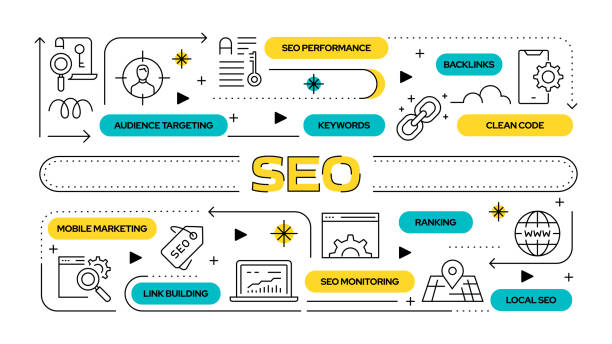
In the ever-evolving landscape of search engine optimization, a fundamental shift has moved the goalposts from merely achieving a high ranking to commanding attention on the search engine results page itself.This shift is powered by what are known as Rich Results.
Get answers to your SEO questions.
