


You know the drill.You’ve optimized your Google Business Profile, built a decent backlink profile, and your on‑page local signals are tight.
GA4 turned measurement into an event-stream problem, which is good news for SEOs who have outgrown session-based vanity metrics. Instead of asking which keyword drove traffic, you now ask which organic entry points produced key events, revenue, and downstream value. For ecommerce, the purchase event should carry transaction_id, value, currency, tax, shipping, and item arrays with item_id, item_name, item_brand, item_category, price, and quantity. For lead generation, generate_lead, form_submit, or a custom qualified_lead event must be marked as a key event. The strategic move is to assign monetary values to non-ecommerce key events when possible, because GA4 then lets you compare organic landing pages by total revenue and key-event value in the same report. Without that mapping, SEO remains a traffic channel instead of a revenue channel.
The default Traffic acquisition report is only the starting point. Filter session default channel group to Organic Search, then add key events, total revenue, transactions, and average purchase revenue as secondary dimensions. But the default attribution model in GA4 is data-driven, and it distributes credit across touchpoints. That is better than last-click for SEO, though it can still compress credit when paid or email touchpoints dominate the path. Use the Model comparison report to compare data-driven, last-click, and first-click for the same conversion. If organic search assists heavily but closes less often, first-click or linear views will expose that contribution. For deeper analysis, build a free-form exploration with dimension landing page plus session default channel group and metrics key events, total revenue, and sessions. Filter to organic and sort by revenue per session, not raw sessions.
Ecommerce reporting exposes the real value of content. A blog post that ranks for high-intent product comparisons may not convert on the first visit, but it can seed a purchase path that ends days later. Path exploration in Explorations shows the sequence of events and pages before purchase. If you see organic landing pages appearing as second or third touchpoints before a branded search or direct return, those pages deserve credit. Join that with Google Search Console data by importing GSC into GA4 or by exporting both to BigQuery. Then you can analyze landing page plus query and see which informational queries lead to key events and which only generate bounce traffic. Segment branded versus non-branded queries with a regex. Non-branded organic revenue is usually the harder and more meaningful SEO number.
Attribution remains messy. Cross-device journeys and consent mode can leave gaps, especially in regions with strict privacy rules. GA4 uses identity spaces, Google signals, and modeled conversions to fill some holes, but you should not treat modeled data as gospel. For ecommerce sites with long consideration cycles, extend conversion windows where appropriate and use BigQuery export for custom attribution logic. Item-level data is where SEO gets tactical. If organic landing pages drive purchases of high-margin items but low average order value, the content may need better internal links to bundles or upsells. If a page drives many transactions but high return rates or low margin, revenue alone is misleading. Pass margin or product category as custom item parameters when possible, then compare organic landing pages by profit-adjusted value.
The practical workflow is a feedback loop. Audit your GA4 events in DebugView, confirm purchase and key events fire once, and exclude internal traffic. Build an organic SEO dashboard in Looker Studio with landing page, query, key events, revenue, conversion rate, and revenue per session. Use annotations for algorithm updates, content launches, and technical releases. Find pages with high impressions and low click-through rate in GSC, then check whether their GA4 on-page engagement and key-event rate justify a title or content refresh. Find pages with high assisted conversions and low direct conversions, then strengthen calls to action and internal links. Find pages with high revenue per session and low traffic, then scale those topics with cluster content. This is how GA4 moves from reporting to prioritization.
Measuring goals and ecommerce performance in GA4 is not about chasing perfect attribution. It is about building a defensible model that connects organic search to business outcomes. When key events, ecommerce parameters, attribution comparisons, and query-level data work together, SEO conversations shift from rankings and sessions to pipeline, revenue, and customer quality. That is the level of measurement modern search programs need to survive budget scrutiny and earn reinvestment.

You know the drill.You’ve optimized your Google Business Profile, built a decent backlink profile, and your on‑page local signals are tight.

You have likely spent the last year populating your content calendar with hyper-specific queries, targeting the low-hanging fruit of the search engine results pages.The initial data looks promising; impressions are up, and your rank tracking shows green arrows for queries with three or four words.
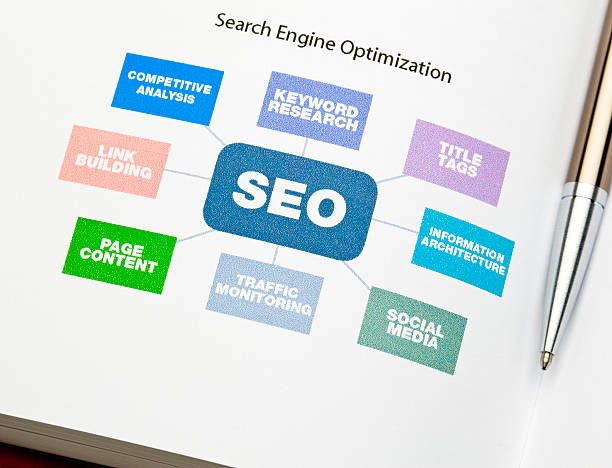
In the intricate and ever-evolving world of search engine optimization, few metrics generate as much curiosity and confusion as link velocity.At its core, link velocity is the rate at which a website acquires new backlinks over a specific period.
Get answers to your SEO questions.
